About

Meet the author

Sal Casamassima


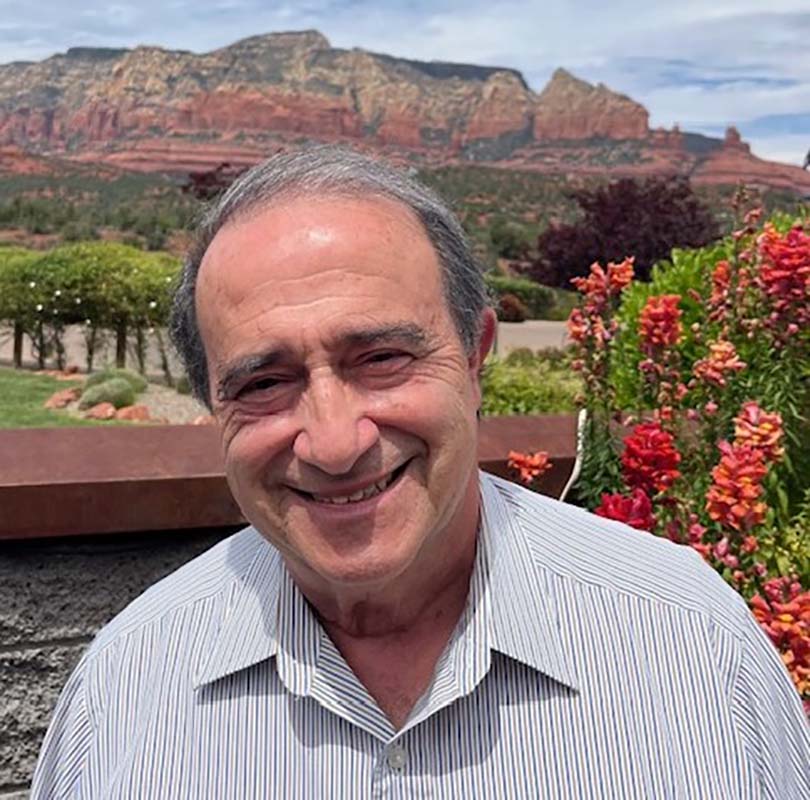
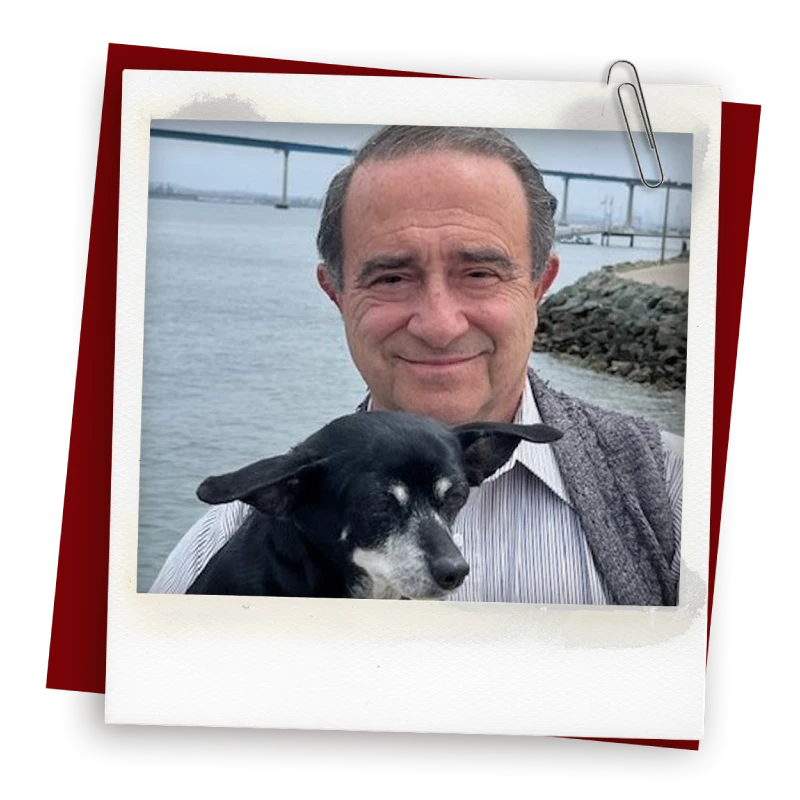
Sal Casamassima is an attorney whose only prior writing experience was drafting legal briefs and contracts. He decided to take early retirement from his corporate job and wandered through various pursuits such as coaching his daughter’s softball teams and amateur wine making. During his wanderings in retirement wonderland, Sal often annoyed his daughter by expressing his latent desire to write a mystery novel. In a vain attempt to stop his banter, she told hm to put up or shut up by taking on the NaNoWriMo challenge to complete a 50,000-word novel in the month of November. Of course, Sal failed to complete the required word count, but alas he was infected by the writing bug and trudged forward to complete his first novel.
 
In his novel writing journey, Sal decided to go against the grain prevalent in current pop culture. The story and characters in his books are set in contemporary society and actual cities where the crime to be solved is grounded in reality and influenced by the societal challenges we all confront in today’s world. His main characters may have their own quirks and personality flaws but they are portrayed as real people that most of us can relate to.

Sal writes his books without a final outline in mind. He has no clue how the mystery will be solved and leaves it to his protagonists to solve the case for him in real time. He’s their stenographer and types what they are speaking or thinking. His story and character arcs forces readers to look in the mirror and ask how they would confront the roadblocks standing in the way to solving the mystery. He invites readers to join the cast and become one of the protagonists – or, possibly, one of the antagonists, if tempted to do so.
 
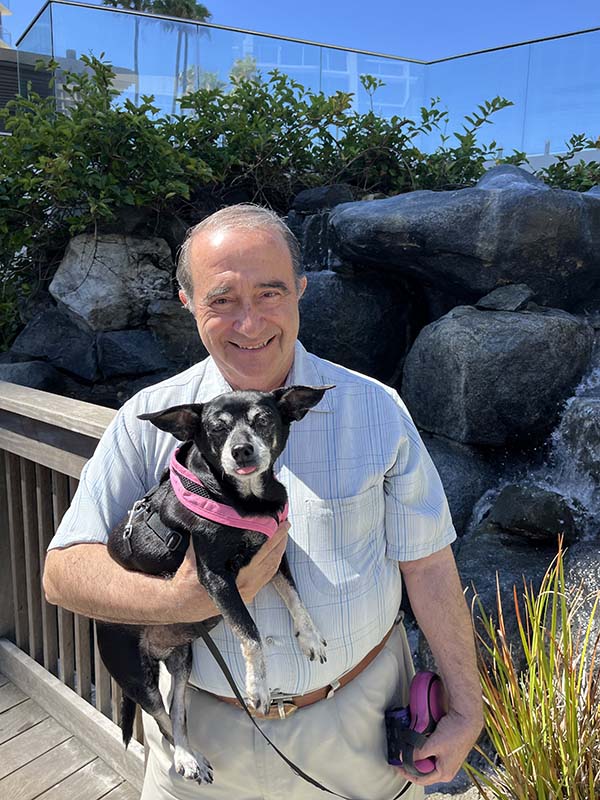
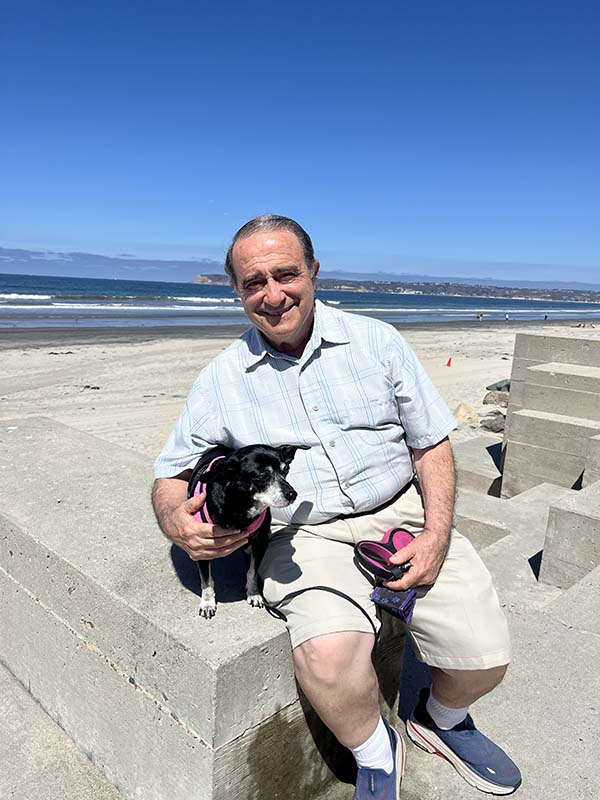
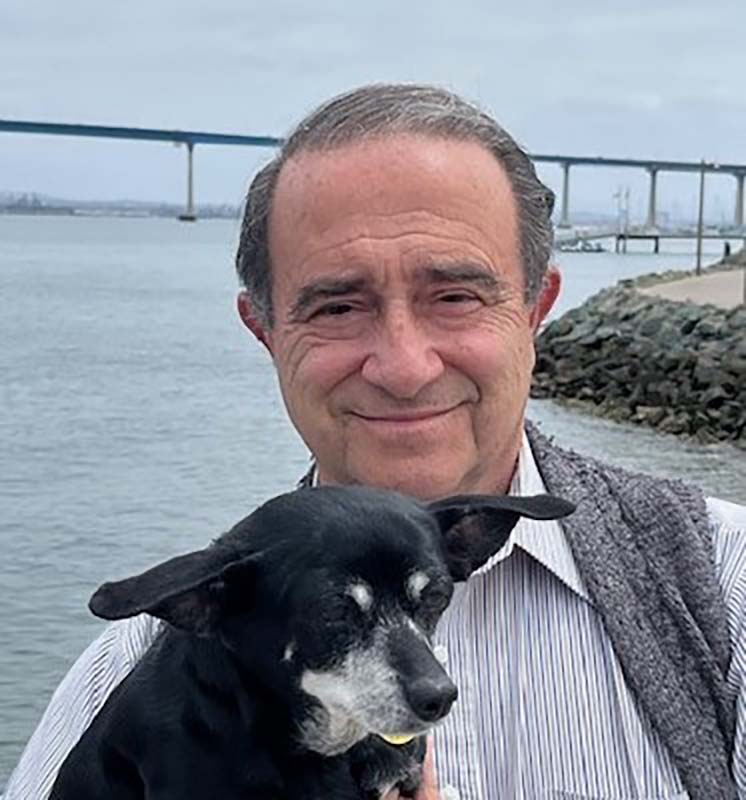
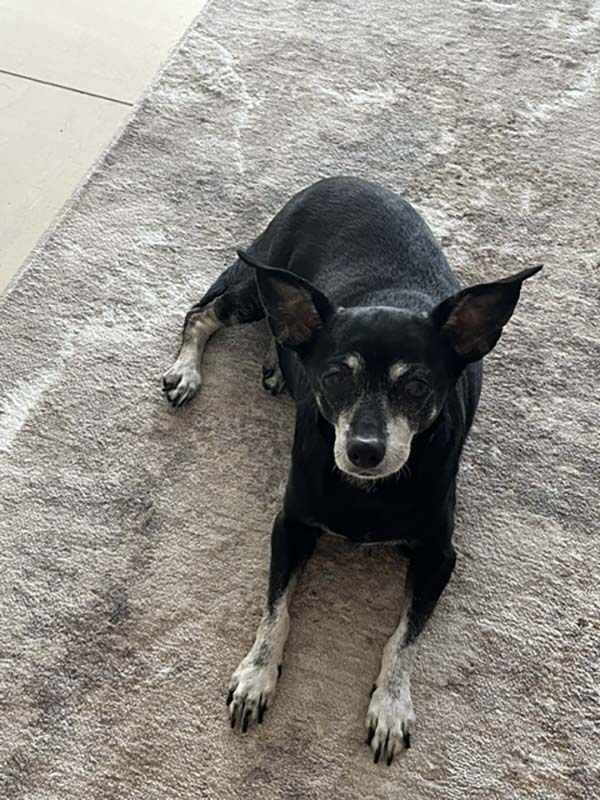
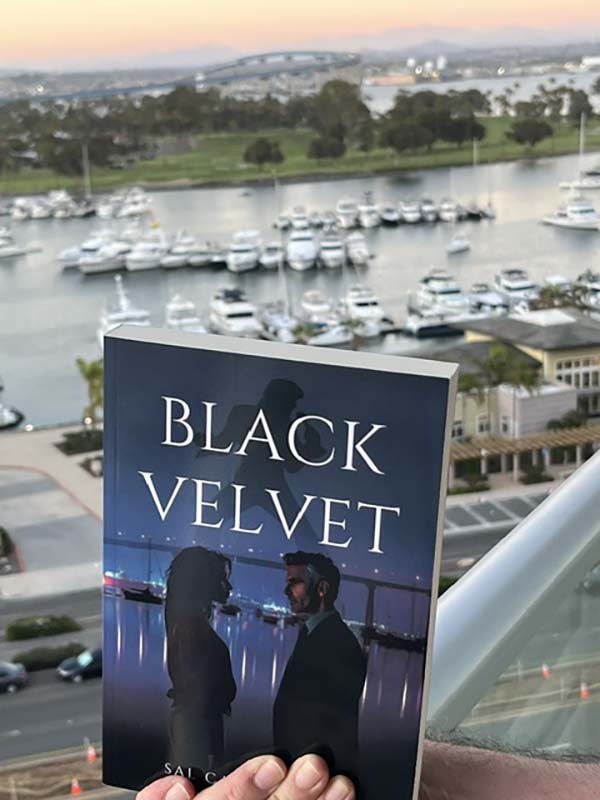
Sal lives in beautiful San Diego, the primary locale for his first novel. Being somewhat of a weather wuss he enjoys the forever mild temperatures in a city that some describe as a climate cul-de-sac. Sal takes advantage of this balmy weather by taking aimless walks with his Minpin dog (who is portrayed in his books.)

FAQ

Frequently Asked Questions

The word “inspired” is misleading.  The more accurate word is “dare.”  As an attorney my only prior writing experience was drafting legal briefs and contracts and I never wrote anything resembling a book.  During my wanderings in retirement wonderland, I constantly annoyed my daughter by expressing a latent desire to write a mystery novel.  In an attempt to stop my endless banter, she told me to put up or shut up by taking on the NaNoWriMo challenge to complete a 50,000-word novel in the month of November.  I failed, of course, to complete the required word count, but was bitten by the writing bug and trudged forward to complete the novel.

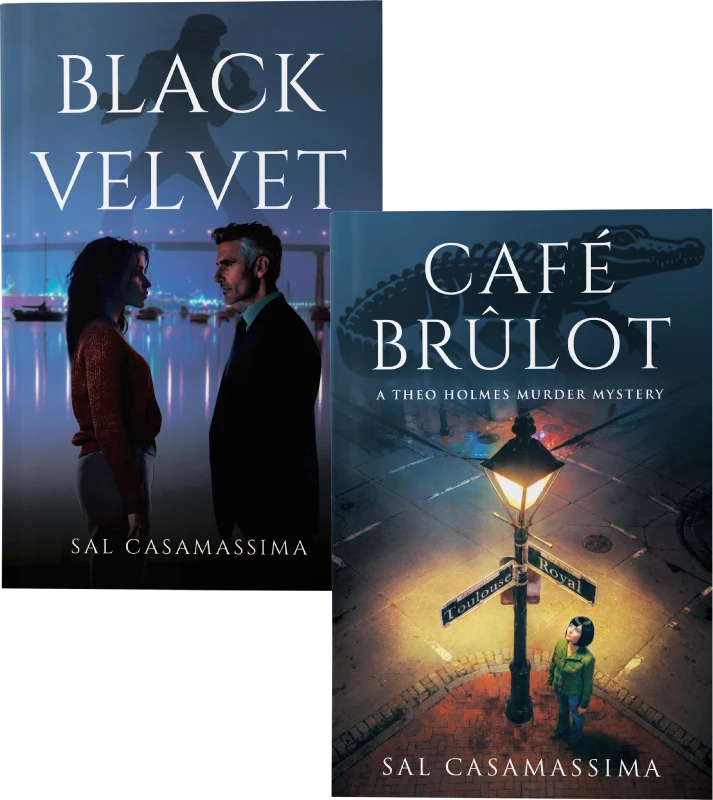
All of the above.  First, my book – Black Velvet – is a contemporary novel, meaning it’s taking place in the present time in a real locale and city.  That allows me to weave in the current cultural events and societal issues swirling around us.  Real facts make for realistic fiction.  The real world also identifies my characters.  They are all around us and there’s plenty to choose from.  Finally, and unfortunately in today’s world (but fortunately for authors) there’s crime and homicide happening every day.  The fun part, as a writer, is looking at all these real ingredients in our contemporary world and figuring out how to blend them all together into a delicious stew called a mystery novel.

My dog.  A number of years ago I bought my daughter a toy Meerkat at the San Diego Zoo.  It’s quite realistic and looks like an actual Meerkat.  My dog, Zuzu (a 15 lb Minpin) likes to play with her chew toys but whenever she sees the toy Meerkat her eyes bulge and she goes ballistic – pounding the toy into the ground to “murder” the poor thing as if it was a real animal.  Years later, when writing Black Velvet, I used this true story in the book as Holmes uses his pet Minpin (Loofy) to demonstrate an example of a genetic trigger of homicidal behavior.  Zuzu and I recently re-enacted this scene on a video you can find on this website.  Even though Zuzu is now in her golden years, she still has it in for that poor Meerkat.

Since I’ve only just finished my second book, I probably still qualify as an “aspiring author” and should be the last person to give such advice.  But I’ll give it a shot.  My advice is to sit down and start writing.  Don’t worry about POV, plotter versus pantser, sub-genre, character arcs and all the other fiction writer blather.  You can (and will) fix all of that later.  Just begin the writing process and let the words flow.  Think of it as having a heart-to-heart conversation with your best friend.  Your friend doesn’t care about your sentence structure or plot twist.  He or she just wants to hear your story.  So, just tell it.

A big role!  Unlike fantasy novels where the number of wings on the dragon is determined by your imagination, in contemporary mystery novels you better get your facts straight.  If you introduce DNA and forensics, as I did in Black Velvet, you can’t get mixed up on what type of DNA your criminalist is discussing.  As to scenes in real cities, you need to understand landmarks, neighborhoods, entertainment venues and correct names of restaurants.  If you make a mistake that slips through to the published book it will get caught by one of your readers.  Time spent on research is well spent and is an absolute necessity for contemporary mystery novels.

In Black Velvet, protagonist Delaney Watson is asked by Holmes to use her acting chops (from her prior musical jobs) to meet up with and have drinks with a suspect.  She says to Holmes: “You want me to meet a serial killer?  I acted in musical comedies, not Silence of the Lambs.”  For me this brought back to life the bone chilling scene in the movie where Anthony Hopikins reminisces about his victim’s liver, served up with fava beans, and a nice Chianti.

Having conversations with my characters.  I begin writing my books without a final script or outline in mind and I don’t have a clue how the mystery will be solved.  I leave it to my protagonists to solve the case for me.  I’m their stenographer and simply type what they are speaking or thinking.  That’s why I mainly use present tense.  I’m hoping the reader has the same reaction.  I want my story and story and character arcs to force the reader to ask how they would confront the roadblocks standing in the way to solving the mystery.  I invite my reader to join the cast and become one of the protagonists – or, possibly, one of the antagonists, if tempted to do so.

I think the problem with recent character portrayals, in both books and movies, is that they are action figures, verging on super heroes.  These characters are often exaggerated tropes who most of us can’t relate to.  I want my characters, even the antagonists, to be more relatable.  In other words, be like the rest of us.  What I try to do is extract fictional characters from real people we often see in our daily lives.  For example, a real social media “influencer” had a direct influence on shaping the character, Delaney Watson.

In answering the earlier question on doing research, I recalled a real screw up in not adequately doing some DNA research for a critical scene in Black Velvet.  My daughter, who is a microbiologist, mentioned this to me but I forgot her warning.  Fortunately for me (and quite miraculously), my line editor previously worked in a biotech lab and also caught the mistake.  It forced me to re-write several chapters which turned out to strengthen the story line and plot.  I hope some astute readers will figure out the mistake I made and how it was corrected.

This is a great question because it really happened.  Delaney was given an important task by Holmes to call and question total strangers who might have a connection to the killer.  Delaney, who has no prior investigative experience (she was in musical comedies), takes on the task and does what I didn’t expect – find an important breakthrough in the case.

Stephen King learned the hard way not to intrude on a great film maker, Stanley Kubrick, when his book, The Shining, was made into a masterpiece by Kubrick.  However, I’ll answer the question because I’ve thought a lot about which actors might be good fits for the roles of the various characters.  Since I have two co-equal protagonists, Theo Holmes and Delaney Watson, I have two actors in mind.  I’ve decided on a brother/sister team – Pedro Pascal and Lux Pascal.  When you look up Lux Pascal you’ll understand why I picked her for the role of Delaney Watson.  The really hard question, that I’ve yet to answer, is who should play P.A.M.?  Any suggestions?

Take some time off – walk the dog, dine out, read a book (in a different genre), take a nap, go on a weekend trip, get some physical activity.  This will recharge the little grey cells and may reignite your creativity.

I want readers to think more critically about the societal issues raised in my books and how so many of these issues are complex and don’t have black or white answers.  The same applies to the characters.  The best protagonist may have some offensive quirks and personality flaws.  Even the worst antagonist may have some redeeming qualities or experienced personal trauma that changed the trajectory of their life.  Some books entertain by providing escapism.  That’s fine.  We sometimes need to escape our nutty world.  But other times books should make us focus on our world and how we might make it better.

Most definitely.  I intend for my first two Theo Holmes books to be part of a series.  I’ll be leaving some nuggets in them that might portend how characters will develop or what will happen in future books.  After all, every author wants their readers to return for more.


Gallery

Newsletter

Uncover the Mysteries

Receive updates from the case files

Join the mailing list for new release announcements, exclusive articles, character features, city spotlights, genealogy discoveries, video content, and behind-the-scenes insights from the world of Theo Holmes.